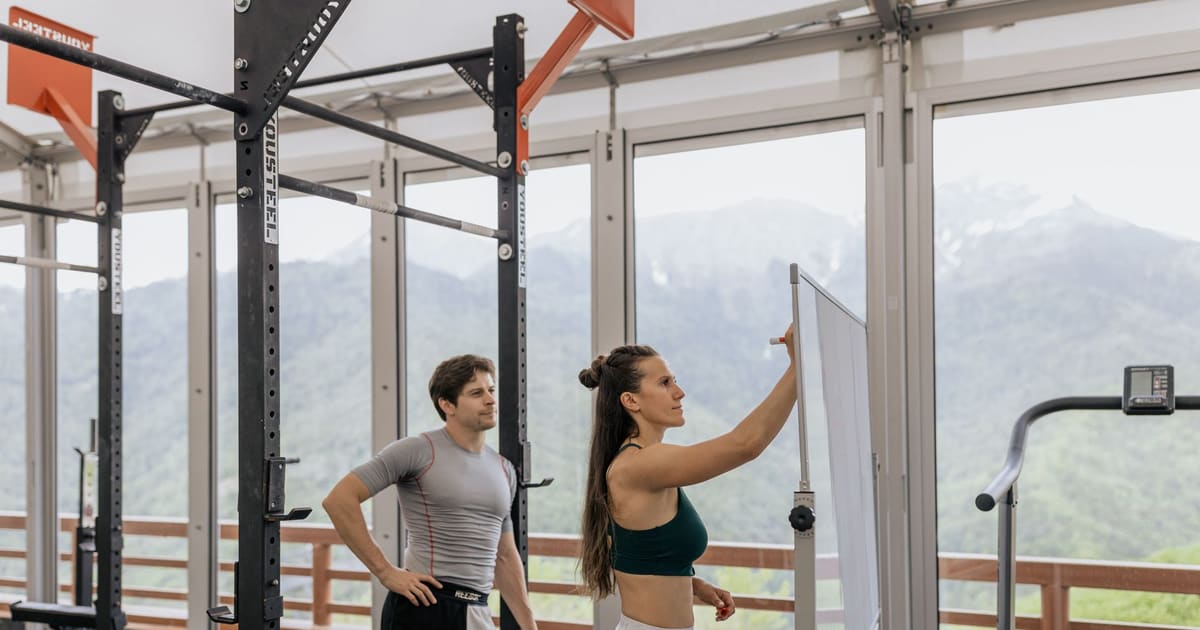
Group fitness classes span six broad categories -- cycling, barre, pilates, yoga, HIIT, and strength-based formats -- each with distinct intensity levels, cost structures, and training outcomes. According to IHRSA (the Health and Fitness Association) industry data, group fitness participation accounts for a significant share of total gym engagement in the US, with boutique studios driving a large portion of growth. Choosing the right format depends on your goal, budget, and what you will actually stick with.
What are the main group fitness class formats?
The fitness class market has expanded significantly over the past decade. The formats below cover the major categories a consumer is likely to encounter:
Cycling (indoor/spin): High-intensity cardiovascular format on stationary bikes. Instructor-led with music. Boutique cycling studios such as SoulCycle and Peloton Studios charge a premium; gym-based cycling classes are typically included in standard membership.
Barre: Low-impact format drawing from ballet, pilates, and physical therapy. Uses a ballet barre and light props for balance and resistance. Emphasizes isometric holds and high-repetition movements targeting the lower body and core.
Pilates (mat and reformer): Core-focused, precision-driven format emphasizing controlled movement and breath. Mat pilates uses bodyweight; reformer pilates uses a spring-resistance machine. Reformer classes are typically smaller and more expensive.
Yoga: Broad category including vinyasa, hatha, yin, hot, and power yoga variants. Varies widely in intensity. Studio yoga is more expensive than gym-included yoga classes.
HIIT (High-Intensity Interval Training): Alternating high-effort and recovery intervals, often combining cardio and strength movements. The highest calorie burn per class of any common group format.
Strength/functional training classes: Barbell-based formats (BodyPump), CrossFit, and circuit training. Higher injury risk than low-impact formats but the strongest stimulus for muscular development in a group setting.
Side-by-side comparison: intensity, cost, and training focus
| Format | Intensity | Typical drop-in cost | Best training outcome | Impact level |
|---|---|---|---|---|
| Indoor cycling / spin | High | $20 - $40 | Cardiovascular endurance | Low (no impact) |
| Barre | Low to moderate | $20 - $35 | Lower-body endurance, posture | Very low |
| Mat pilates | Low to moderate | $15 - $30 | Core strength, flexibility | Very low |
| Reformer pilates | Moderate | $30 - $50 | Full-body strength, mobility | Very low |
| Yoga (vinyasa) | Low to moderate | $15 - $30 | Flexibility, stress reduction | Low |
| Hot yoga | Moderate | $20 - $35 | Flexibility, cardiovascular | Low |
| HIIT | High | $15 - $30 (gym) / $25 - $40 (boutique) | Calorie burn, conditioning | High |
| Strength class (BodyPump, CrossFit) | Moderate to high | $20 - $40 | Muscular endurance / strength | Moderate to high |
Monthly membership costs vary by format and studio type. For detailed pricing on specific formats, see individual cost guides: Pilates Class Cost: Mat, Reformer, and Studio Prices, Barre Class Cost: Studio Prices, Memberships, and Class Packs, Spin Class Cost: Studio Prices, Memberships, and Drop-In Rates, and Yoga Class Cost: Studio Prices, Memberships, and Drop-In Rates.
Which formats are best for beginners?
Beginners benefit from formats that prioritize instruction over performance, allow self-paced effort, and carry lower injury risk while learning movement patterns.
Yoga and mat pilates are the most commonly recommended formats for fitness beginners, based on guidance from the American Council on Exercise (ACE). Both have low impact, are highly adaptable to different fitness levels within the same class, and emphasize movement quality over intensity. An instructor can offer modifications without disrupting the class.
Barre is also frequently recommended for beginners because the movements are slow, controlled, and accessible. The learning curve is low compared to barbell-based strength formats.
HIIT and CrossFit-style classes are not ideal starting points for complete beginners unless the class is specifically labeled as a beginner or on-ramp session. High-intensity formats with complex movements under fatigue require a baseline of motor skill and conditioning to perform safely.
Note
If you have a cardiovascular condition, musculoskeletal injury, or have been sedentary for an extended period, consult your physician or a licensed healthcare provider before starting any group fitness program, including low-impact formats. Medical clearance is especially important before beginning high-intensity classes.
Which formats are best for weight loss?
The format with the highest calorie expenditure is HIIT, followed by indoor cycling. Both burn substantially more calories per session than yoga, barre, or pilates, based on exercise science research on metabolic equivalents by activity type.
However, calorie burn per session is only one input in a weight-loss outcome. Adherence is the other. Research published in the Journal of the American Medical Association and reviewed by the American College of Sports Medicine (ACSM) consistently shows that exercise consistency over time drives weight management outcomes more than the intensity of any single session. A barre class you attend three times per week will produce better outcomes than a HIIT class you attend once per month.
Choose the format you will show up for. Then optimize for intensity once the habit is established.
Which formats build strength and which build flexibility?
The formats divide fairly clearly along these lines:
Strength development: CrossFit, BodyPump-style barbell classes, HIIT programs that include loaded movements. These formats produce the highest muscular stimulus per session and are most likely to support muscle development.
Muscular endurance and posture: Barre, mat pilates, reformer pilates. These formats develop the slow-twitch muscle fibers and stabilizer muscles often undertrained in cardio-dominant exercisers.
Flexibility and mobility: Yoga (especially yin and restorative formats), pilates. These formats directly target range of motion and connective tissue flexibility.
Cardiovascular endurance: Indoor cycling, HIIT, dance formats. These formats primarily train the cardiovascular system with secondary muscular benefit.
Most exercisers benefit from mixing formats. A person who does yoga three times per week and cycling twice per week trains flexibility, cardiovascular endurance, and movement quality in a single weekly schedule.
How to choose a starting format based on your goal and fitness level
A simple matching framework:
- Primary goal is stress reduction and flexibility: start with yoga or restorative pilates
- Primary goal is cardiovascular fitness: start with cycling or HIIT (with appropriate onboarding)
- Primary goal is core strength and posture: start with mat pilates or barre
- Primary goal is calorie burn and conditioning: HIIT or cycling, 2 to 3 times per week
- Recovering from a lower-body injury: consult a physical therapist before starting; if cleared, mat pilates or yoga at moderate effort is usually safest
For a deeper look at when group classes outperform one-on-one training and vice versa, see Group vs. One-on-One Training: Cost and Format Compared.
Individual results from any group fitness format vary and depend on consistency, effort level, nutrition, and individual physiology. No class format or instructor can guarantee specific outcomes.
Key takeaway
The best group fitness format is the one that matches your goal and that you will attend consistently. For beginners, yoga or mat pilates offer the safest entry with the lowest injury risk. For calorie burn, HIIT and cycling lead on per-session output. For strength, CrossFit or barbell class formats top the group options. Most exercisers benefit from combining formats rather than committing to one exclusively.
Frequently asked questions
What is the most popular group fitness class format in the US?
According to IHRSA (the Health and Fitness Association) industry data, cycling and yoga consistently rank among the highest-participation group fitness formats by class volume and studio revenue. HIIT-based formats have grown significantly in the past decade and are now among the most widely offered categories at both boutique studios and big-box gyms.
Which group fitness class is best for weight loss?
HIIT formats burn the most calories per session, typically 400 to 600 calories per class, and produce post-exercise calorie expenditure for several hours after training. However, the format that supports weight loss most is the one you attend consistently. A less intense class done regularly outperforms a high-calorie-burn class done sporadically.
Is group fitness as effective as personal training?
Group fitness is effective for general conditioning, cardiovascular health, and consistency building, but it delivers less individualization than personal training. A group instructor cannot correct every participant's form in real time or adjust programming to your specific injury history. For goal-specific or injury-managed training, personal training adds value a class cannot replicate.
Which group fitness formats are low impact and joint-friendly?
Yoga, mat pilates, barre, and water aerobics are the lowest-impact group fitness formats, based on commonly cited clinical exercise science guidance. These formats minimize joint loading from jumping and heavy impact. Low-impact does not mean low-intensity -- barre and pilates reformer classes can be demanding despite involving minimal impact forces.
How many group fitness classes per week produce results?
The American College of Sports Medicine (ACSM) guidelines recommend at least 150 minutes of moderate-intensity or 75 minutes of vigorous-intensity exercise per week for health benefits. Two to three group classes per week typically meets this threshold. Adding a fourth session accelerates conditioning gains for most participants, assuming adequate recovery.
Can you build muscle from group fitness classes alone?
Most group fitness formats develop muscular endurance rather than hypertrophy. Formats with loaded strength components -- such as BodyPump-style barbell classes, CrossFit, and some HIIT programs -- can support modest muscle development, particularly for beginners. For significant muscle gain, progressive overload with individualized loading is more effective than most group formats provide.