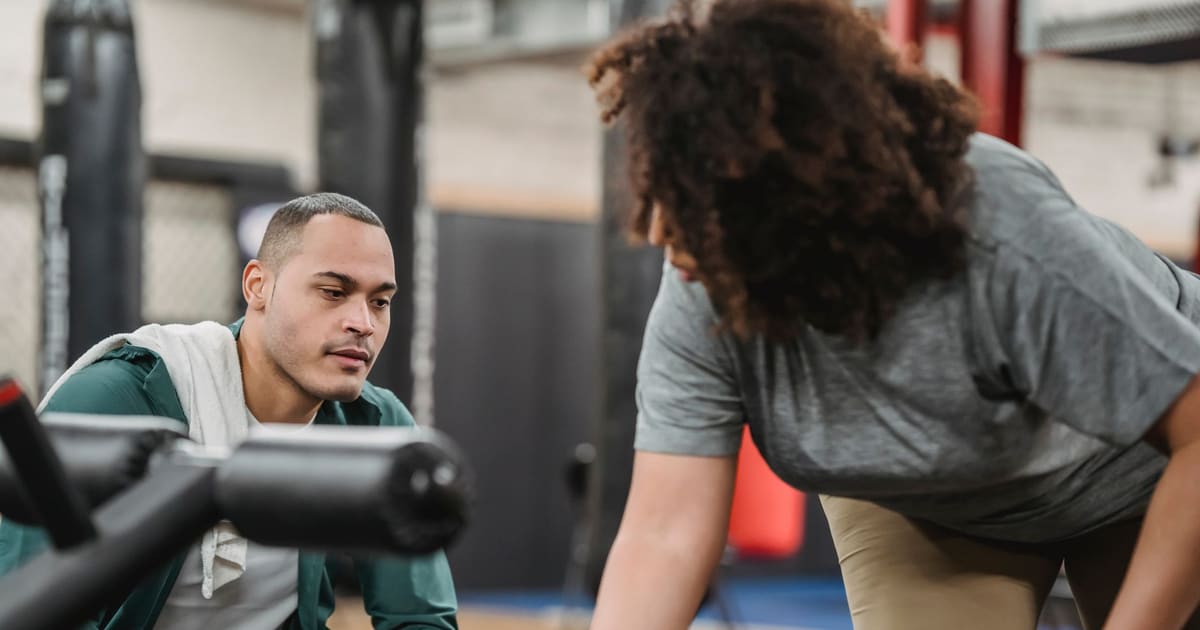
Beginners have the most to gain from a personal trainer because the earliest sessions establish movement foundations that either protect or expose someone to injury for years afterward. Whether a trainer is worth the cost for a specific beginner depends on their goal, budget, and how much structure they need to stay consistent. For someone learning barbell movements or returning from a sedentary period, a qualified trainer typically shortens the learning curve and reduces injury risk in ways that matter.
Why beginners have the most to gain from a trainer
Personal training is not equally valuable at every experience level. The training literature and practical experience from certified trainers consistently identify beginners -- roughly the first three to six months of structured exercise -- as the period where professional guidance adds the most measurable value.
The reasons are specific:
Movement pattern learning happens once. A squat, deadlift, or overhead press learned incorrectly in the first weeks of training becomes a reinforced habit that is harder to correct later. A qualified trainer catching a knee cave or a lower back rounding on the first session prevents that pattern from becoming automatic. According to the National Strength and Conditioning Association (NSCA), proper technique acquisition in novice lifters is the primary variable in both injury prevention and long-term strength development.
Beginners cannot identify what they are doing wrong. An experienced lifter can feel when a lift is off. A beginner does not yet have the proprioceptive awareness to notice a neutral spine or a forward knee shift. The trainer's eyes provide the feedback the beginner's body cannot yet generate.
Programming for a beginner is simple but not obvious. The principle of progressive overload -- gradually increasing training stress to force adaptation -- is straightforward in concept but requires judgment in practice. Adding too much weight too fast, or skipping recovery days, produces overtraining or injury. A trainer removes that guesswork during the phase when beginners are most likely to either do too little (no adaptation) or too much (injury).
What a trainer does in a beginner's first sessions
A beginner's first several sessions with a qualified trainer typically cover:
- An intake assessment covering health history, current fitness level, injuries, and stated goals
- Movement screening to identify obvious mobility limitations or asymmetries that would affect programming
- Introduction to foundational movements appropriate to the goal (e.g., squat, hinge, push, pull patterns for general strength; low-impact cardio for someone primarily targeting cardiovascular fitness)
- Explanation of how programming will progress over the following weeks
The intake and movement screen are not just administrative steps. They are how a trainer avoids programming movements that would expose an existing injury or limitation to unnecessary stress.
For detailed guidance on what to bring to and expect from the first meeting, see How to Prepare for Your First Training Session.
When self-guided programs are a reasonable alternative
A trainer is not the only path for a beginner. Self-guided programs work reasonably well when:
The goal is general cardiovascular fitness rather than strength. Walking, jogging, cycling, and swimming are movements most people can execute safely without professional supervision. The injury risk of an improperly performed jog is lower than that of an improperly performed barbell deadlift.
A structured beginner program from a credible source is followed consistently. Several beginner strength programs with published methodology -- including programs published by NSCA-affiliated coaches -- provide progressive overload structure and have track records with novice lifters. The risk of a self-guided program rises primarily when the individual skips progressions or ignores recovery signals.
The individual has access to a knowledgeable training partner. An experienced training partner who understands movement cues is not a certified trainer, but provides more real-time feedback than training alone.
Budget is a binding constraint. A beginner who cannot afford regular trainer sessions is better served by a structured free program executed consistently than by sporadic trainer sessions they cannot sustain financially.
Tip
Many trainers offer a free initial consultation or discounted assessment session. Use this to get a movement screen and programming direction, even if ongoing sessions are not in budget. An hour with a qualified trainer at the start of a self-guided program is one of the highest-value training investments available.
How to choose a trainer who works well with beginners
Not all trainers have equal experience with beginners. When evaluating trainers, ask specifically about their experience with clients who have no training background. Questions worth asking:
- How many of your current clients are beginners with no prior structured training?
- What does your intake and movement assessment process look like?
- How do you structure the first four to six weeks for a new client?
- What certifications do you hold, and are they NCCA-accredited?
The four most widely recognized NCCA-accredited personal training certifications are NASM-CPT, ACE-CPT, NSCA-CPT or CSCS, and ACSM-CPT. Ask any trainer you are seriously considering to confirm NCCA-accredited certification status. For a fuller breakdown of what credentials mean, see What Certifications Should a Personal Trainer Have?.
A trainer who is impatient with novice questions, who pushes high-intensity programming without a movement screen, or who does not ask about your health history before the first session is displaying warning signs worth taking seriously.
What it typically costs to start with a personal trainer
One-on-one in-person personal training typically costs $50 to $100 per session for a beginner in most US markets, with urban markets in high-cost cities running higher, according to IDEA Health and Fitness Association survey data. Most beginners who work with a trainer start with two sessions per week, which amounts to $400 to $800 per month at standard rates.
| Training format | Typical cost per session | Monthly cost (2x/week) | Best for |
|---|---|---|---|
| One-on-one in-person | $50 - $100 | $400 - $800 | Beginners learning new movements with high injury risk |
| Semi-private (2-4 clients) | $30 - $60 | $240 - $480 | Beginners with moderate budgets who want some coaching |
| Group fitness class | $15 - $35 per class | $120 - $280 | Beginners with low budgets or low-risk movement goals |
| Online coaching | $100 - $300/month | $100 - $300 | Beginners who train independently and want programming structure |
For a full breakdown of pricing by format, experience, and geography, see Personal Trainer Cost: What to Expect.
Note
Semi-private training -- two to four clients sharing a trainer in a single session -- is often overlooked as an option for beginners. At $30 to $60 per session, it provides meaningful form feedback at roughly half the one-on-one rate. For beginners working on general fitness rather than highly technical movements, it is often a better value than either one-on-one training or large group classes.
How long most beginners need structured guidance before training independently
Most beginners can transition to meaningful independent training after three to six months of consistent guided work, once they have internalized foundational movement cues and understand how to apply progressive overload to their own programming. This transition is not a cliff -- many people maintain periodic trainer check-ins for accountability or program updates while training independently most of the time.
The factors that extend the timeline include:
- Complex goal requirements (competitive powerlifting, sport-specific preparation, post-injury return)
- Slow movement pattern acquisition, which varies between individuals
- Low intrinsic motivation where the trainer relationship is the primary accountability mechanism
Individual results from personal training vary widely and depend on consistency of attendance, nutrition, sleep, and overall health status. No trainer or program guarantees specific fitness outcomes.
Questions to ask a trainer before your first session
Before committing to a training package, ask:
- What does your intake assessment cover, and do you perform a movement screen?
- How do you structure the first month for a beginner who has never trained?
- What is your cancellation and makeup policy for missed sessions?
- What is your experience with clients at my specific starting point?
A trainer who responds thoughtfully and specifically to these questions is demonstrating the kind of process-oriented approach that produces good results for beginners. A trainer who pushes you to sign a package before answering them is not.
For a broader guide to evaluating whether professional training is worth the cost for your specific situation, see Is a Personal Trainer Worth It? An Honest Assessment.
Frequently asked questions
Should a complete beginner hire a personal trainer?
A complete beginner gains more from a trainer than anyone at a more advanced level, because the earliest sessions involve learning foundational movement patterns where errors compound over time. A trainer reduces injury risk and shortens the learning curve. Whether the cost is justified depends on the individual's budget, goal clarity, and availability of free or low-cost structured alternatives.
How long does it take for a beginner to need less trainer supervision?
Most beginners can train with greater independence after three to six months of consistent guided training, once foundational movement patterns are established and they understand how to progress their own programming. The timeline varies based on training frequency, the complexity of the goal, and how quickly the individual absorbs coaching cues. Some people maintain trainer-guided sessions longer for accountability.
Is a personal trainer or a group fitness class better for beginners?
A personal trainer offers individualized form correction that group classes cannot provide at scale. Group classes are lower cost and provide social motivation, but a coach cannot watch every participant closely in a class of 15. For a beginner learning barbell movements or returning from injury, one-on-one supervision is meaningfully safer. For general fitness or low-risk formats like yoga, a group class is a reasonable starting point.
What should I tell my trainer at my first session?
Tell your trainer your specific goal (lose weight, build strength, improve endurance, return from injury), your current activity level, any existing injuries or medical conditions, and your scheduling and budget constraints. Honest intake information helps the trainer design programming that fits your starting point and reduces the risk of programming that is too intense or poorly matched to your actual capacity.
Is it embarrassing to hire a personal trainer as a complete beginner?
Trainers work with beginners regularly and expect clients at all fitness levels. Most trainers specifically prefer working with beginners because the coaching impact is highest when someone is learning foundational movements for the first time. There is nothing to be embarrassed about -- a beginner who has never touched a barbell is exactly the type of client a qualified trainer is trained to help.
How much does it cost to start personal training as a beginner?
A beginner starting with a personal trainer typically pays $50 to $100 per session for one-on-one in-person training, according to IDEA Health and Fitness Association industry data. Many beginners start with two sessions per week, bringing monthly cost to $400 to $800. Semi-private training at $30 to $60 per session is a lower-cost alternative that still provides form feedback. Online coaching runs $100 to $300 per month.