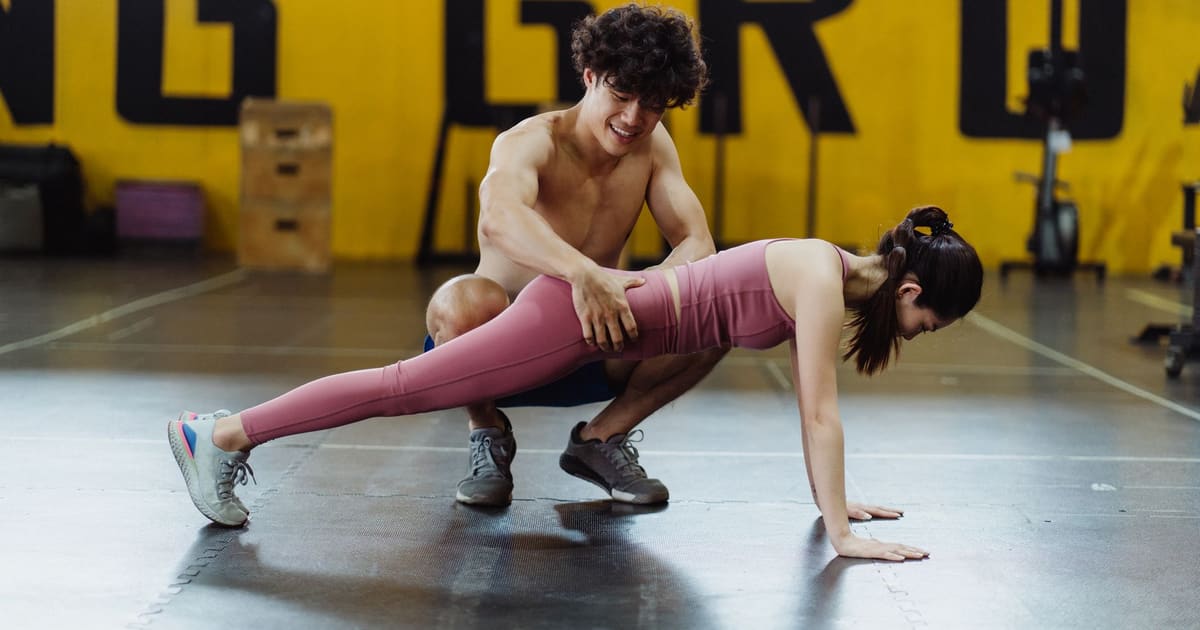
Seniors benefit most from trainers who hold a primary NCCA-accredited certification and a recognized specialty credential in older adult fitness, with documented experience in balance training, mobility work, and low-impact strength programming. Sessions for older adults typically involve lower loads, more extensive warm-up periods, and greater attention to fall-prevention movements than standard adult training. One-on-one personal training for seniors typically costs $50 to $120 per session, consistent with general personal training rates, based on IDEA Health and Fitness Association survey data.
Why seniors often benefit from professional training guidance
Older adults face specific physiological changes that make structured, supervised exercise more valuable than self-directed gym attendance:
Muscle mass loss (sarcopenia). After age 30, adults lose an estimated 3 to 8 percent of muscle mass per decade without resistance training, according to published research in the Journal of Aging and Physical Activity. After 60, that rate accelerates. Supervised resistance training directly counters sarcopenia and is one of the most evidence-supported interventions for maintaining functional independence.
Balance and fall risk. Falls are the leading cause of injury-related death among Americans over 65, according to the Centers for Disease Control and Prevention (CDC). Balance and proprioception decline with age. A trainer experienced with older adults integrates balance training - single-leg exercises, unstable surface work, and reactive drills - into programming in a way that self-directed exercise rarely does.
Chronic condition management. Many older adults manage hypertension, type 2 diabetes, osteoporosis, arthritis, or cardiovascular disease. These conditions require exercise programming modifications that a general trainer may not be trained to apply safely. A trainer with a relevant specialty credential understands how to adapt intensity, equipment, and movement selection for each condition.
Confidence and adherence. Research on exercise behavior in older adults consistently finds that supervised training increases adherence rates compared to unsupervised gym attendance. The accountability and social element of working with a trainer addresses a primary barrier to exercise consistency in this population.
Warning
Before starting a new exercise program, consult your physician or a licensed healthcare provider - particularly if you are managing a cardiovascular condition, have osteoporosis, have had a recent fall, or have been sedentary for an extended period. Medical clearance is especially important before beginning resistance training.
What qualifications to look for in a trainer for older adults
A trainer for older adults should have, at minimum:
A primary NCCA-accredited certification. The National Commission for Certifying Agencies (NCCA) accredits training certifications that meet rigorous education and examination standards. The four most recognized are NASM, ACE, NSCA, and ACSM. Verify the trainer's certification directly on the certifying body's website, not just from a resume. For full credential standards, see What Certifications Should a Personal Trainer Have?.
A specialty credential in older adult fitness. Several certifying bodies offer specialty credentials specifically for working with older adults: the ACE Certified Senior Fitness Specialist, NASM's Senior Fitness Specialization, and ACSM's Certified Exercise Physiologist (EP-C) credential are the most commonly cited by certification-body guidance as appropriate for medically complex older adult clients.
Documented older adult client experience. Credentials are necessary but not sufficient. Ask the trainer how many of their current or recent clients are over 60 and what health conditions they have experience working around. A trainer who primarily works with athletes in their 20s and 30s may lack the practical experience to modify programming for a 70-year-old with hip replacement and hypertension.
CPR/AED certification. This is standard for any personal trainer but particularly relevant for older adult clients who have a higher statistical likelihood of cardiovascular events during exertion.
What a typical session looks like for an older adult client
A competent trainer working with an older adult client structures sessions differently than general adult programming:
Extended warm-up. Older adults typically require 10 to 15 minutes of progressive warm-up before significant loading - more than the 5-minute warm-up common in standard adult sessions. Mobility work, activation exercises, and gradual heart rate elevation prepare the body more safely.
Lower load, higher attention to form. The priority in early sessions is movement quality under light load, not maximizing weight. A trainer who immediately loads a new older adult client at challenging weights is prioritizing the wrong variable.
Balance and stability components. Sessions should include dedicated balance training - single-leg stance, tandem stance, balance reach exercises - integrated throughout rather than as an afterthought. These directly address the fall-prevention priority.
Clear progression records. Every session should be documented. Progression for older adults is often slower than for younger clients, and documentation makes it visible. Without records, a trainer cannot demonstrate that progress is occurring.
Adequate rest between sets. Rest intervals between strength sets are typically longer for older adults - 90 seconds to 2 minutes - compared to the 60-second intervals common in younger client programming. Fatigue accumulates faster and recovery takes longer.
Balance and fall-prevention training: what to ask about
Fall prevention is often the most clinically important training priority for older adults. When interviewing a trainer, ask specifically:
- "What specific exercises do you use for balance and fall prevention?"
- "How do you progress balance training safely for someone who has had a recent fall?"
- "Do you use any validated fall-risk assessments (such as the TUG test or Berg Balance Scale)?"
A trainer who cannot answer these questions with specificity - or who dismisses fall prevention as secondary to general fitness - is not the right fit for an older adult client at meaningful fall risk.
Medical clearance before starting: who needs it and why
Medical clearance before starting personal training is strongly recommended for all adults and is essential for seniors with any of the following:
- Cardiovascular disease, hypertension, or atrial fibrillation
- Osteoporosis or prior fragility fracture
- History of falls in the past year
- Recent orthopedic surgery (hip replacement, knee replacement, shoulder repair)
- Neurological conditions (Parkinson's disease, stroke recovery, peripheral neuropathy)
- Type 1 or type 2 diabetes with significant blood glucose instability
- Sedentary lifestyle for more than 12 months
Medical clearance is not just a formality - it informs the trainer about exercise contraindications and helps design programming that is safe for your specific health profile. Some physicians will provide specific written guidance; others will simply confirm that exercise is appropriate. Either is useful information for a qualified trainer.
What does personal training for seniors typically cost?
Personal training rates for older adults are generally consistent with standard personal training rates. One-on-one in-person sessions typically cost $50 to $120 per hour, based on IDEA Health and Fitness Association survey data on trainer compensation by geography and experience level. Trainers with specialty credentials in older adult fitness may charge at the higher end of their local range.
| Training format | Typical cost | Relevant for seniors |
|---|---|---|
| One-on-one in-person | $50 - $120 per session | Primary format for complex health histories |
| Semi-private (2-3 clients) | $25 - $55 per session | Appropriate for mobile, lower-risk older adults |
| Senior group fitness class | $5 - $20 per class (or included in gym membership) | SilverSneakers, water aerobics, chair yoga |
| Online/virtual training | $30 - $80 per session | Home-based; good for mobility-limited clients |
For a broader format and cost comparison, see Group vs. One-on-One Training: Cost and Format Compared.
Individual results from personal training for older adults vary widely and depend on starting fitness level, consistency of attendance, physician-approved health parameters, and overall health status. No trainer or program can guarantee specific outcomes.
Alternatives if one-on-one training is out of budget
One-on-one personal training at $50 to $120 per session is a significant expense for many older adults on fixed incomes. Several alternatives provide structured guidance at lower cost:
SilverSneakers. Available through many Medicare Advantage plans at no additional cost. Provides access to participating gym facilities and senior-focused group fitness classes. Check plan eligibility at the SilverSneakers enrollment portal.
YMCA senior programs. The YMCA operates senior fitness programs in most US markets at substantially lower cost than boutique personal training. Y-associated programs often include EnhanceFitness and Fit and Strong - evidence-based group exercise programs specifically designed for older adults.
Semi-private training. Training in a small group of two to three clients with one trainer reduces per-session cost to $25 to $55 while maintaining more individualized attention than a general group class. Ask whether any local trainers offer semi-private sessions for older adult clients.
Community college fitness programs. Many community colleges offer low-cost adult fitness courses, including senior-specific programming taught by faculty with relevant credentials.
For guidance on evaluating any trainer before committing, see Signs of a Bad Personal Trainer: 10 Red Flags to Watch For and How to Choose a Personal Trainer.
Key takeaway
Older adults benefit significantly from qualified professional training guidance, particularly for balance, fall prevention, and progressive strength work. The key is finding a trainer with both a primary NCCA-accredited certification and documented experience with older adult clients. Medical clearance before starting is essential. One-on-one training at $50 to $120 per session is the highest-value format for seniors with complex health histories; group formats and community programs provide lower-cost alternatives for healthier, more mobile older adults.
Frequently asked questions
What age is considered a senior for personal training purposes?
Most fitness professionals and certification bodies use age 65 as a general threshold for 'older adult' programming, aligned with U.S. Department of Health and Human Services physical activity guidelines. However, physiological age matters more than chronological age. Some trainers apply senior-specific considerations for clients in their late 50s with relevant health factors; others work with active 70-year-olds using standard adult programming.
Is it safe for seniors to lift weights with a personal trainer?
Yes, with appropriate medical clearance and qualified supervision. Resistance training is specifically recommended for older adults by the American College of Sports Medicine (ACSM) and the National Institute on Aging. Strength training improves bone density, muscle mass, balance, and metabolic health in older adults. The key is appropriate load progression and a trainer experienced with the older adult population. Always obtain physician clearance before starting.
What certifications indicate a trainer is qualified to work with older adults?
Look for a primary NCCA-accredited certification (NASM, ACE, NSCA, or ACSM) plus a specialty credential in older adult fitness. Recognized specialty credentials include the ACE Certified Senior Fitness Specialist, the NASM Senior Fitness Specialization, and the NSCA's CSCS designation when combined with documented older adult experience. ACSM's Certified Exercise Physiologist (EP-C) is appropriate for clients with chronic conditions.
How often should a senior train with a personal trainer?
The ACSM recommends that older adults perform strength training at least two days per week and aerobic activity at least 150 minutes per week of moderate intensity. For trainer-supervised sessions, two sessions per week is a practical starting point that allows adequate recovery between strength sessions. The trainer can supplement with guidance for independent exercise on non-session days.
Is group fitness a viable alternative to personal training for seniors?
Yes, for older adults who are generally healthy and mobile. Senior-specific group fitness formats - water aerobics, chair yoga, SilverSneakers, tai chi - provide social engagement alongside physical activity at much lower cost than one-on-one training. The limitation is that group formats cannot individualize programming for specific health conditions, injuries, or balance deficits. One-on-one training is better for seniors with complex health histories.
Does Medicare or insurance cover personal training for seniors?
Standard Medicare does not cover personal training. Some Medicare Advantage plans include fitness benefits through programs like SilverSneakers, which provides access to participating gyms and some group fitness classes at no additional cost. Individual personal training sessions are not typically covered. FSA and HSA funds cannot be used for personal training unless prescribed by a physician for a specific medical condition in some jurisdictions.